Professional food safety experts located in Brampton help maintain food service establishments, commissaries, baking enterprises, warehouses, and mobile food units to sanitation standards. They treat frequently handled areas, food-contact areas, equipment, floors, drains, restrooms, and preparation zones using approved sanitizers, at proper strength, and using documented contact periods.
Main Points
- Brampton's sanitation specialists clean for restaurants, grocery departments, commissaries, warehouses, bakeries, schools, mobile vendors, and allergen-sensitive operations.
- Cross-contamination avoidance is maintained by cleaning frequently contacted areas, food-contact equipment, kitchens, floors, drains, restrooms, and storage areas with area-specific procedures.
- Verification of approved sanitizer dilution, compatibility, and exposure duration is conducted by trained specialists, with completion recorded using swabs, audits, and remedial documentation.
- Maintenance timelines need to follow threat, throughput, transitions, releases, and standards, with everyday, regular, and seasonal tasks distributed by area.
- Select suppliers with HACCP, public-health, understanding, WHMIS, training, liability, credentials, color-coded instruments, and compliance-ready maintenance documentation.
Food Safety Cleaning Requirements for Brampton Operations
Food safety cleaning is necessary for any Brampton facility that processes, stores, prepares, packages, or serves food. Apply it to your operation if it meets the criteria for public health review, food regulations, or HACCP protocols. This includes eateries, cafes, warehouses, supermarket areas, meat markets, fish stands, convenience outlets, and institutional food areas.
You'll also need compliant food safety cleaning in distribution warehouses, production plants, frozen storage areas, commercial bakeries, educational meal programs, banquet venues, and food delivery services. Portable business models matter as well, examples being food trucks, event sellers, and temporary stalls. When your workers process ingredients, portion ready-to-eat items, reheat products, or store allergens, your location requires recorded sanitation procedures. In Brampton, food safety stays necessary; it comprises regulatory, business, and safety adherence.
Which Areas Do Brampton Cleaning Experts Cover?
Your facility requires professional cleaners who disinfect frequently contacted surfaces, kitchens, all floor types, and toilet facilities to maintain food safety compliance and public health standards. These zones receive attention because they represent the most significant contamination risk, hazardous walking conditions, and violations of hygiene standards.
By understanding their service scope, you are able to confirm your facility's cleaning procedures satisfy all operational and regulatory requirements.
Focusing on High-Touch Surface Cleaning
base sterilization intervals based on usage patterns, exposure levels, and facility operations.
Maintaining a directional system, rotating towels, and keeping cleaning supplies according to section ensures that cleaning remains quantifiable, defensible, and inspection-ready continuously
Food Prep Areas, Flooring, and Sanitary Facilities
Brampton cleaning professionals will handle kitchens, floors, and restrooms since each space presents separate food safety concerns, injury, and community health challenges. In industrial kitchens, you need degreasing on cook lines, equipment exteriors, drains, prep surfaces, and splash zones to minimize bacterial growth and pest activity.
Professional floor care with documentation is also included. is also provided as part of the service.
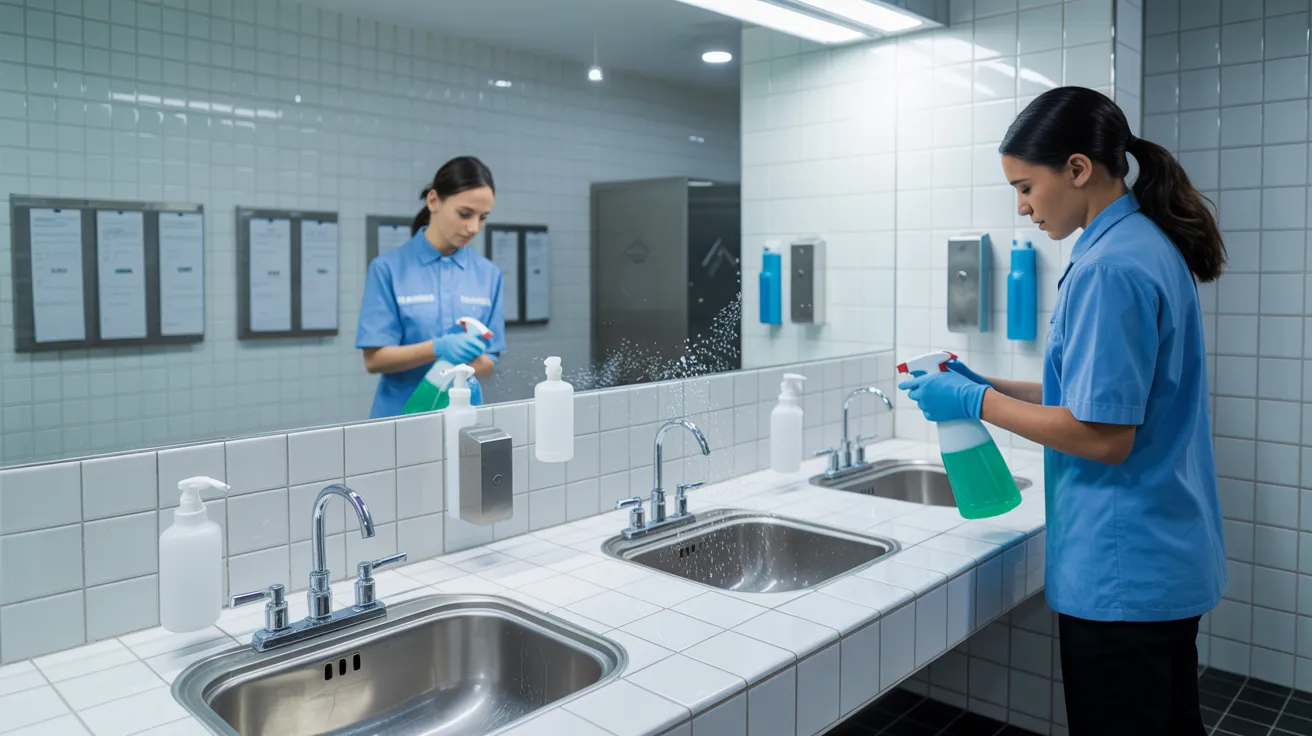
Restroom cleaning requires decontaminating touchpoints, fixtures, partitions, dispensers, and waste containers, replacing items and managing smells. They also service restaurant moprooms, where chemical storage, sink hygiene, and drainage conditions can affect sanitation compliance and staff safety daily.
How Food Safety Cleaning Benefits Brampton Operations
Brampton businesses need to establish proper sanitation practices for satisfying health code requirements and obtaining approval. You also minimize bacterial spread through proper cleaning of food-preparation surfaces, appliances, and frequently-touched items. Most importantly, you safeguard community wellness by reducing the chance of food poisoning in your establishment.
Food Safety Regulations
Because Brampton food companies operate under rigorous sanitary regulations, food safety cleaning directly influences your capacity to satisfy health code requirements, safeguard customers, and prevent enforcement action. You must maintain sanitized food contact points, recorded sanitation plans, safe chemical management, and verifiable staff procedures that correspond to municipal and provincial inspection expectations.
During inspections of your operation, officials evaluate if your cleaning program ensures proper stock preservation, tool sterilization, trash control, and bathroom upkeep.
Cross-Contamination Prevention
Adhering to regulatory guidelines requires your expertise in stopping cross-contamination throughout routine preparation and sanitation work. You need to separate raw ingredients from ready-to-eat foods, clean prep surfaces between tasks, and store cleaning supplies separately from food. Organized systems minimize contamination events and ensure consistent compliance during inspections.
You could implement allergen segregation to prevent priority allergens from contacting shared surfaces, containers, or equipment. Apply separate boards, color-marked equipment, and rigorous tool identification so staff don't mix items during preparation or service. Mandate handwashing after handling uncooked meat, fish, egg products, or allergens. Swap cleaning rags frequently, and check sanitizer strength with test strips. When you train staff to follow these controls every shift, you develop a more sanitary, secure business that matches Brampton's safety requirements every day.
Community Health Protection
Should cleaning standards collapse, you don't simply risk a failed inspection—you increase the potential of foodborne illness harming customers, staff, and the wider Brampton population. You also undermine your responsibility in protecting public health, especially in busy food facilities where contamination can spread quickly through surfaces, equipment, and touchpoints.
You must implement sanitation protocols that eliminate contaminants, properly disinfect, and verify results. This entails adhering to exposure times, utilizing authorized sanitizers, recording schedules, and coaching staff to meet health-unit expectations. These initiatives promote disease prevention by reducing microbes before affecting food surfaces or hands. In Brampton, robust sanitation protects at-risk groups, curtails outbreak likelihood, and proves your diligence. When you maintain standards, you go beyond regulations—you substantially reduce risk and promote secure food service across the region.
In What Ways Does Cleaning Help Achieve Food Safety Compliance?
Maintaining thorough cleaning protocols supports food safety compliance by decreasing contamination threats, limiting pathogen development, and keeping your facility compliant with sanitation requirements under HACCP-based programs and public health regulations. You verify that food-handling surfaces are visibly clean and microbiologically controlled, enabling documented preventive controls and inspection readiness.
Well-executed cleaning efforts also reinforce allergen mitigation by removing residues that can lead to undeclared allergen exposure.
When Ought You Arrange Commercial Cleaning?
high-volume production periods, product transitions, spillage events
closures, seasonal-related soil accumulation, or pest management periods.
Selecting the Right Brampton Cleaning Experts: Key Considerations
Evaluate providers first by sanitation compliance standards rather than cost. You must ensure each provider understands CFIA, public health, and HACCP requirements for your business. Request proof of insurance, WHMIS compliance, staff training documentation, and supervision methods. Check technician awareness of cross-contamination risks, chemical handling, and documented sanitation practices.
Additionally, you need to evaluate operational reliability and responsibility. Obtain references from food facilities in Brampton, then review service speed, corrective measures, and communication standards. Verify the company supports supplier audits and can deliver compliance-ready records when inspectors or external parties need proof. Verify equipment is maintained, colour-coded tools are applied correctly, and site-specific hazards are identified. A qualified provider protects compliance, product quality, and your brand reputation.
Which components are contained in a hygiene cleaning program?
Establish a documented plan that clarifies every sanitation task, standard, and responsibility before production begins. You should specify cleaning frequencies, approved chemicals, dilution rates, contact times, tools, and verification methods for each zone, surface, and piece of equipment. Make sure to include pre-operational inspections, corrective actions, and employee training requirements.
Your plan should also include cross-contamination prevention, waste disposal, pest management measures, and scheduled documentation for restrooms, drains, floors, and food-contact areas. Specify how you'll separate raw and ready-to-eat processes, support ingredient tracking, and copyright accurate allergen labeling through validated cleaning between product changes. You should define accountability, maintain signed records, and check results against regulatory standards, HACCP controls, and customer requirements. When gaps appear, adjust procedures immediately and re-educate staff.
Frequently Asked Questions
Will cleaning services manage overnight shifts at Brampton properties?
If you operate controlled facilities, you'll also need documentation that support inspections and maintain compliance.
Are emergency spill response solutions available from sanitation professionals?
Yes, you can discover many Brampton cleaning professionals providing hazard containment options. They manage contamination, evaluate risks, isolate contamination, and begin swift decontamination to minimize exposure and avoid operational impact. You should confirm timeframes, credentials, safety protocols, and disposal methods. begin here If your facility must meet compliance standards, select a service that documents events, adheres to standards, and supports verification.
Can eco-friendly disinfectants be used safely on food-contact surfaces?
Definitely, green disinfectants function safely on food preparation areas if you select solutions certified for food use that comply with regulatory compliant. You should check application timing, dilution ratios, and rinse procedures in advance of use. Plant-derived products reduce harsh chemical exposure, but you need demonstration of efficacy against relevant pathogens. To maintain residue-free conditions, adhere to precise manufacturer instructions and ensure your sanitizer adheres to relevant food safety standards.
Can cleaning plans be adjusted for seasonal production changes?
Certainly, maintenance plans adjust to production fluctuations well. Adapt schedules, personnel, sanitizers, and validation steps to fit with seasonal patterns while preserving compliance standards. Reduce equipment downtime by organizing sanitation during production shifts, maximum output, and usage cycles. Also revise written procedures, instruction programs, and environmental testing to capture periodic risks, additional allergens, or increased soil loads. Periodic assessments maintain your program effective.
Will commercial cleaners teach your staff on sanitation best practices?
Yes, commercial cleaners often train your team on hygiene standards. You get employee instruction on correct chemical application, contact times, cross-contamination prevention, equipment disassembly, and record keeping. They typically align instruction with HACCP, GMP, and CFIA or local public health requirements. Many perform sanitation audits to confirm adherence, spot deficiencies, and reinforce corrective actions. This allows you to sustain uniform processes, pass inspections, and minimize contamination hazards regularly.
Summary
When you partner with Brampton commercial cleaning and food safety experts, you don't just tidy up—you keep your operation inspection-ready and your standards above board. From processing areas to kitchen spaces, every clean surface and well-kept corner helps reduce unwelcome guests and avoid expensive problems. By arranging cleanings at the proper frequency and adhering to a detailed cleaning schedule, you protect staff, customers, and your reputation. In a tightly regulated environment, clean spaces are essential—they're part of doing business right.